#include <stdio.h>

struct point {
  double x;
  double y;
};

struct rect {
  struct point ul; /* 左上隅 */
  struct point lr; /* 右下隅 */
};

/* 点p1の右下に点p2がある時に限り, 真を返す */
int is_lr(struct point p1, struct point p2){
  int result;
  if((p1.x <= p2.x) &&          /* p2 の方が右にあって */
     (p1.y >= p2.y)){           /* p2 の方が下にあるなら */
    result = 1;                 /* 真 */
  } else {                      /* そうでなければ */
    result = 0;                 /* 偽 */
  }
  return result;
}

/* 長方形rの内部に点pがあるなら, 真を返す */
int includes(struct rect r, struct point p){
  int result;
  if(is_lr(r.ul, p) &&          /* 左上隅とpの関係 */
     is_lr(p, r.lr)){           /* pと右下隅の関係 */
    result = 1;                 /* 両方OKなら真 */
  } else {                      /* そうでなければ */
    result = 0;                 /* 偽 */
  }
  return result;
}

int main(void){
  struct rect r1 = {{1.0, 2.0}, {3.0, 1.0}};
  struct point p1 = {2.0, 1.5};
  struct point p2 = {4.0, 1.5};

  printf("for p1: %d\n", includes(r1, p1));
  printf("for p2: %d\n", includes(r1, p2));

  return 0;
}
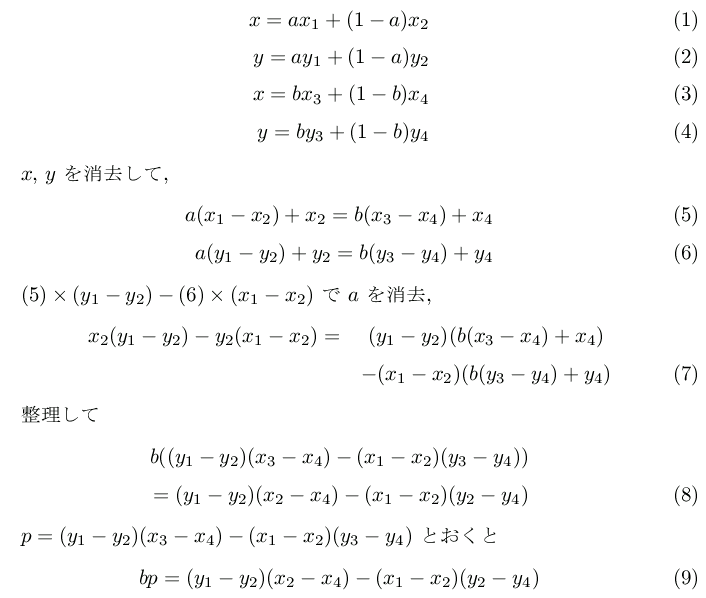
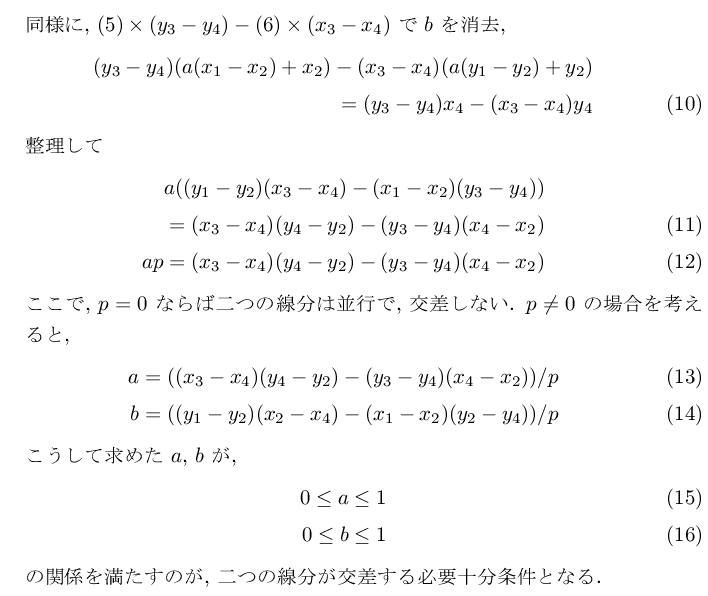
方針だけ, 授業時間に説明します. 数式の導出は以下の通り:
#include <stdio.h>

struct point {
  double x;
  double y;
};

struct line {
  struct point p1;
  struct point p2;
};

/* 二つの線分が交差する時, 真を返す */
int intersects(struct line l1, struct line l2){
  int result;
  double a, b;
  double p;
  double x, y;

  p = (l1.p1.y-l1.p2.y)*(l2.p1.x-l2.p2.x) -
    (l1.p1.x-l1.p2.x)*(l2.p1.y-l2.p2.y);

  /* printf("p: %le\n", p); */
  if(p == 0.0){
    result = 0;
  } else {
    a = ((l2.p1.x-l2.p2.x)*(l2.p2.y-l1.p2.y) -
         (l2.p1.y-l2.p2.y)*(l2.p2.x-l1.p2.x)) / p;
    b = ((l1.p1.y-l1.p2.y)*(l1.p2.x-l2.p2.x) -
         (l1.p1.x-l1.p2.x)*(l1.p2.y-l2.p2.y)) / p;
    /* printf("a: %le b: %le\n", a, b); */
    if((0.0 <= a) && (a <= 1.0) &&
       (0.0 <= b) && (b <= 1.0)){
      result = 1;
    } else {
      result = 0;
    }
  }
  /* printf("\n"); */
  return result;
}

int main(void){
  struct line l1 = {{0.0, 1.0}, {1.0, 0.0}, };
  struct line l2 = {{0.0, 0.0}, {1.0, 1.0}};
  struct line l3 = {{0.0, 2.0}, {1.0, 2.0}};
  struct line l4 = {{0.0, 1.0}, {1.0, 2.0}};
  struct line l5 = {{1.0, 1.0}, {0.0, 1.0}, };

  printf("for l1, l2: %d\n", intersects(l1, l2));
  printf("for l1, l3: %d\n", intersects(l1, l3));
  printf("for l2, l4: %d\n", intersects(l2, l4));
  printf("for l2, l5: %d\n", intersects(l2, l5));

  return 0;
}